Introduction
Managing projects efficiently can make or break a growing business. For small and medium teams, every tool, every process, and every minute counts. Two of the most popular agile methods—Kanban and Scrum—offer structured yet flexible ways to keep work moving. But which one is right for your team?
In this post, we’ll break down Kanban vs Scrum, highlight their strengths, explore when to use each, and show how platforms like ProjectoHub bring both methods together for maximum team performance.
Understanding Kanban
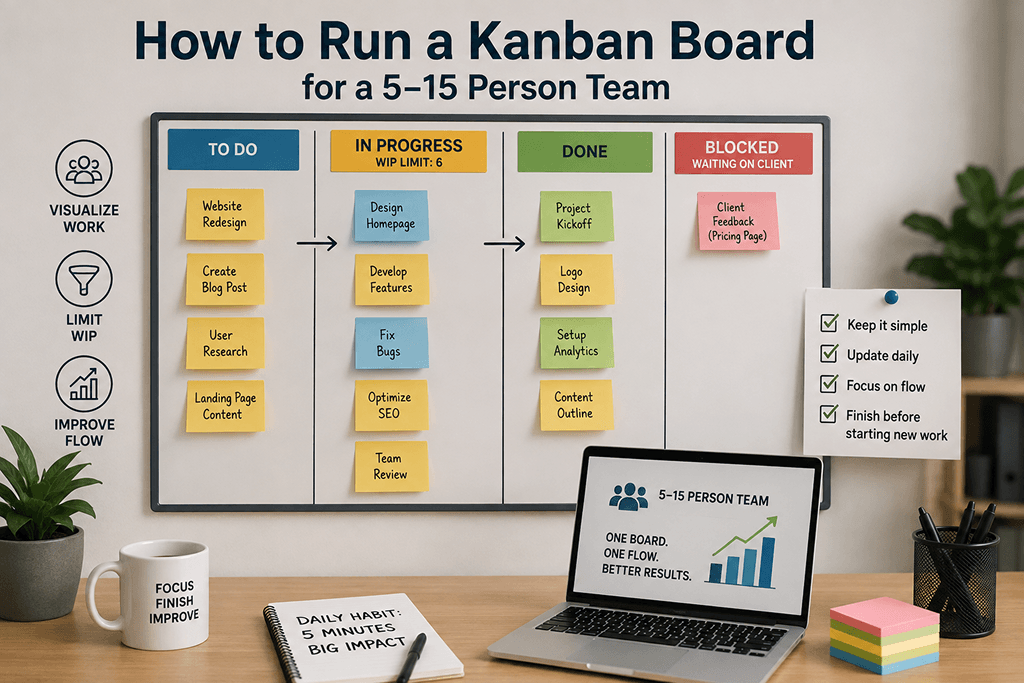
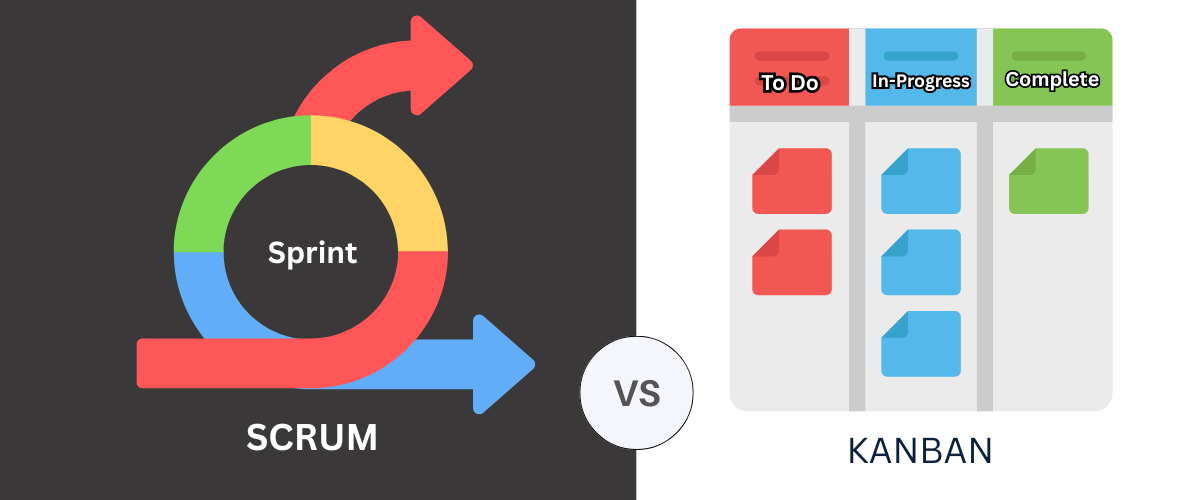
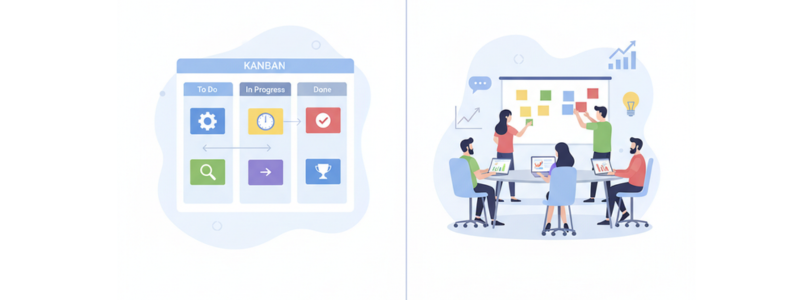
Kanban is a visual project management method designed to make work transparent and improve flow. Tasks are represented as cards on a board, typically moving from stages like “To Do” to “In Progress” to “Done.”
Why small teams love Kanban:
-
Instant visibility: Everyone knows what’s being worked on.
-
Flexibility: You can reprioritize tasks anytime.
-
No strict sprints: Work flows continuously, perfect for creative or support-based teams.
-
Easy to scale: Whether it’s two people or twenty, Kanban grows with you.
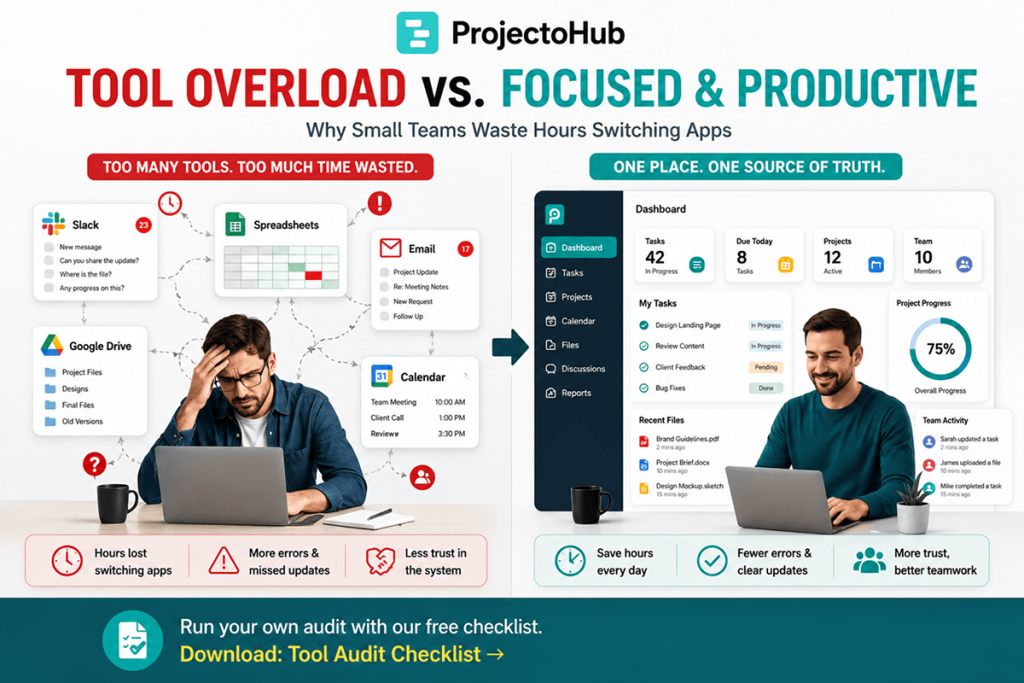
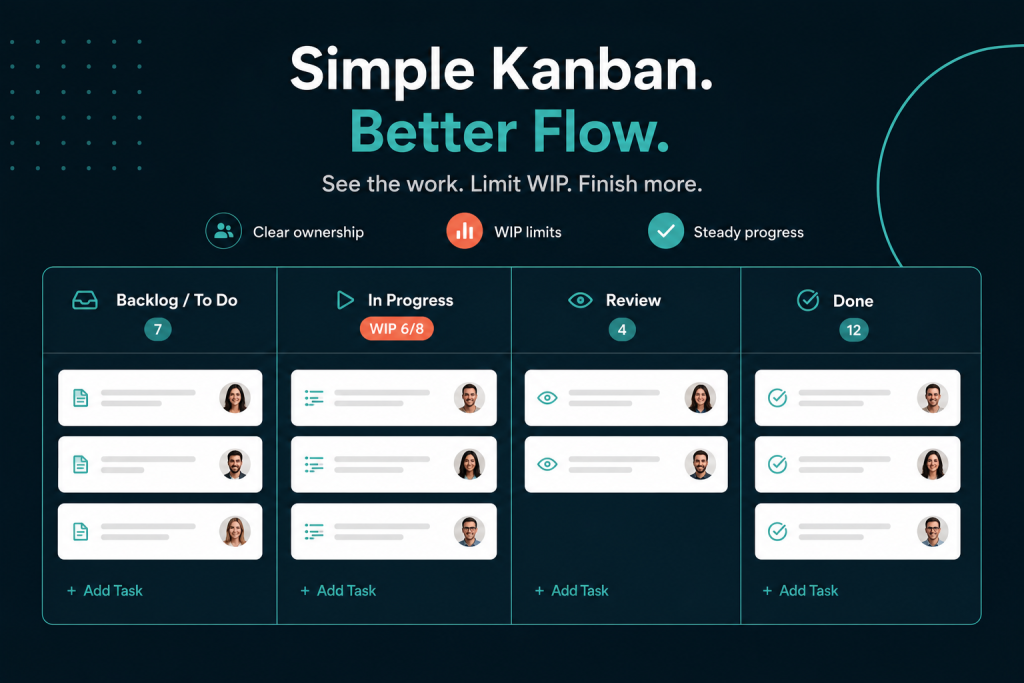
In ProjectoHub, Kanban boards are built right in. You can create tasks, assign owners, set due dates, and track progress visually—all while collaborating with your team in real-time.
Understanding Scrum
Scrum is another agile framework, focused on delivering work in short, repeatable cycles called sprints (usually 1–4 weeks). It’s great for teams that thrive on structure and predictable goals.
Scrum’s strengths:
-
Time-boxed focus: Teams know exactly what to deliver and when.
-
Defined roles: Product Owner, Scrum Master, and Team Members create accountability.
-
Continuous improvement: Retrospectives help refine processes over time.
Scrum works beautifully for development, design, or product teams that release updates regularly.
With ProjectoHub, you can plan sprints, monitor velocity, and use task boards to keep everyone aligned without needing multiple tools.
Kanban vs Scrum — Key Differences
| Feature | Kanban | Scrum |
|---|---|---|
| Approach | Continuous workflow | Sprint-based workflow |
| Roles | Flexible | Defined (Scrum Master, Product Owner) |
| Planning | As needed | Planned before each sprint |
| Metrics | Cycle time, throughput | Velocity, burndown |
| Best for | Teams needing flexibility | Teams needing structure |
In short:
If you prefer freedom and adaptability, go for Kanban.
If your team thrives on planning and iteration, Scrum is your best friend.
When to Use Kanban
Kanban shines when your work is continuous and priorities shift often—like in marketing agencies, design studios, or customer support teams.
Examples:
-
Handling daily content requests
-
Managing social media tasks
-
Coordinating client deliverables
In ProjectoHub, teams can drag and drop tasks, attach files, and comment right on the card—so everyone stays in sync without endless meetings.
When to Use Scrum
Scrum is ideal when your team delivers projects in defined chunks—like app updates, website redesigns, or software features.
Examples:
-
Weekly product releases
-
Agile web design projects
-
Continuous development cycles
ProjectoHub’s task tracking helps you assign sprint goals, measure progress, and review performance easily—all from one dashboard.
Hybrid Approach: The Best of Both Worlds
Many small teams now blend both frameworks. They use Kanban for ongoing work and Scrum for goal-based sprints.
This hybrid setup helps teams:
-
Stay agile while keeping structure
-
Reduce burnout from rigid deadlines
-
Improve visibility across ongoing and time-bound tasks
ProjectoHub naturally supports this hybrid approach with flexible boards, customizable task statuses, and real-time collaboration.
FAQs
1. Which is easier for beginners—Kanban or Scrum?
Kanban is usually easier to start with since it doesn’t require specific roles or sprint planning.
2. Can I switch from Scrum to Kanban later?
Yes. Many teams start with Scrum for structure and shift to Kanban as they grow more confident.
3. How can ProjectoHub help with both methods?
ProjectoHub gives you visual Kanban boards and sprint tools under one dashboard, making it easy to adapt your workflow anytime.
4. What’s the best choice for small remote teams?
Kanban works best for remote teams needing flexibility, though combining both can deliver strong results.
Conclusion
Both Kanban and Scrum help small and medium teams organize work and improve productivity—but your ideal choice depends on your team’s pace and workflow style.
With ProjectoHub, you don’t have to choose. You can blend both methods, create custom boards, track performance, and collaborate effortlessly—all in one simple platform.
Explore how your team can streamline its work today at projectohub.com.